
The Glass House

The Glass House
Father Babin

Constructed in 1949, the Glass House is one of the late architect Philip Johnson’s masterpieces. It is a significant example of modernist architecture, resting on forty-nine acres of semi-rural landscape in New Canaan, Connecticut. As its name suggests, the house is comprised of four walls of sheer glass and is perched on a slight hill overlooking a beautiful vista of trees and a small lake. Set off some distance from the main road, it’s not exactly in full view of the world around. But amid the cleared land surrounding it, and especially after sunset with all the lights on in the house and the moon in view, everything that happens within its walls is on full display.

Philip Johnson described the genesis of the house’s design in this way.

“The Glass House started because of the land that was there. That was my hardest job by far. I worked for three or four years throwing out ideas. And it was all conditioned by the landscape itself. In finding that little knoll, I was in the middle of the woods in the middle of the winter and I almost didn’t find it. I found a great oak tree and I hung a whole design on the oak tree and the knoll because this place, don’t forget, it is more of a landscape park than it is a work of architecture. . .”[1] Johnson later quipped that the Glass House is “[t]he only house in the world where you can see the sunset and the moonrise at the same time, standing in the same place.”

Part of the beauty of this house is its permeability to the outside world and the vulnerability demanded of its inhabitants. The cooking and sleeping and partying in the house are all on full display. There’s no hiding in this glass house, except, thankfully, in the bathroom.

Johnson boldly put himself in the public eye with his Glass House. Critics have analyzed his life as much as the house itself. In that transparent box, he held frequent gatherings of contemporary artist friends, many of whom were gay like he was, in an age when it wasn’t necessarily accepted in society, highlighting his and others’ unwillingness to shy from public scrutiny. Other critics, with psychological penetration, have likened the excessive transparency of Johnson’s house to an architecturally rendered apology for the anti-Semitism and fascist sympathies of his early years.

Whatever the case—and certainly there is much we will never know—the Glass House breaks down the barriers between the outside world and the private, domestic lives of humans.

 I wonder, do we Christians feel like we live in a glass house? We may not literally be living in a city set on a hill—and certainly here in Center City Philadelphia we are more on a plain—but metaphorically, are we not, in some sense, living in a city on a hill with all the lights on in our glass house? In a world that is increasingly suspicious of the church and of Christians, there are always critical observers looking through the windows of our glass house, ready to pounce on any flaws that they witness.

But, of course, the church’s disgraces have needed to be exposed: the sex abuse scandals, the hypocrisy, the abuses of power, the colonialist cruelty—I could go on and on. I’m sure you get the picture, and there really is no way around it. For better or for worse, the church—even in spite of its evident decline—seems to comprise a community of people living in a glass house, set on a hill, with the lights on for everyone to see every move we make.

Too often and historically, Christians have lived in willful or blissful ignorance of this fact, indeed have avoided glass walls altogether. Instead of simple, rectangular glass houses, we have constructed elaborate cruciform structures with thick stone walls and opaque stained glass that can only be appreciated from the inside, when the light from outside shines through them. We, today, sit in an exquisite example of such a solid building, rather dark in a mystical sort of way on the interior. It is gorgeous, and it clearly serves its intended purposes of glorifying God in brick and mortar.

But there is also always a temptation to retreat inside buildings and houses of worship. Church buildings have become refuges from the influences of the nasty world outside. Think about all the ways in which people of faith have fled to their places of worship, hiding behind impenetrable walls from what lies outside. They have created profound but esoteric languages and rituals as they attempt to speak about God, but they have failed to demystify and explain them to outsiders. Others have been so ashamed of seeming foolish or silly in worshipping and serving the living Lord that they have sequestered themselves behind concrete walls, unwilling to expose the heart of their faith to others, for fear of embarrassment.

At its worst, the church has used brick and mortar to shield itself from judgment and scrutiny. The supposed holiness of sacred precincts has given license to all manner of evil. And on a less sinister level, Christians have often failed to be vulnerable or admit their own imperfections and weaknesses.

It’s true that anyone who wants to keep a clean, perfect house dreads the moment that the light shines through the windows and illumines the layer of dust that has accrued on surfaces. The church has been all too reluctant to let others see its own cobwebs lurking in hidden corners.

I wonder if we are willing to show our fragility as imperfect Christians who nevertheless take seriously Jesus’ injunctions to “be perfect as your heavenly Father is perfect”? Are we willing to expose corruption within the church to the light of repentance? Are we willing to examine our past and our present with compunction and a sense of humility?

If we take St. Matthew’s words seriously, Jesus laid a lot of responsibility on the shoulders of his followers. “Whoever breaks one of the least of these commandments, and teaches others to do the same, will be called least in the kingdom of heaven; but whoever does them and teaches them will be called great in the kingdom of heaven.” Like it or not, the person who publicly identifies as a follower of Christ lives in a glass house, and so every action that does not embody the Gospel or every action that does not look like justice, mercy, peace, or compassion is judged in the light of Christ’s redeeming work. And rightly so, because everyone who looks into the glass house and finds an excuse to live apart from the law of God is a soul at risk. And every Christian who aids and abets another soul in turning from God is a soul that is convicted by Christ’s word of truth.

Is it any wonder, then, that Christians have retreated to their stone castle on a hill in order to be isolated from the surrounding world and also impervious to public examination? Does that make us feel safer to do those things we know we really shouldn’t be doing? Do we, in fact, desire a certain amount of freedom to get away with doing whatever we want and living however we want to live, as if there were no law? It’s much harder to live in a glass house or in a city on a hill, because there you have intentionally put yourself in a position of public witness.

But although we Christians have been proficient at seeing the shadow side of walking in the way of Christ, with its risky vulnerability and exposure to criticism, Jesus has invited us to see the beautiful potential of living in a city set upon a hill or in a glass house. Jesus invites us to see that it’s a gift to be embraced in spite of its demands. Even when the sun is setting and the light seems to disappear, the moon is rising at the same time. And although a city built on a hill looks like it’s set apart from the rest of the world, it is, in fact, connected with it. By its very position, it is meant to be a beacon of hope to a hurting, troubled landscape.

If we recall Philip Johnson’s glass house, we remember that the surrounding landscape was its inspiration. The house was not just intended to be something for people to gaze critically into. Instead, the identity of the house itself is informed by its strong link to what lies outside its glass walls. A church residing as a city set upon a hill, when it adopts an outward looking posture, is deeply tied to everything that inhabits the space outside its walls. The church as a body of Christ’s disciples is called to sit in a hopeful place of vulnerability to the exterior world.

So, what might it look like to be a light to the world shining from a glass house on a hill? If we throw the lights on in our houses of worship, can we inspire others by our willingness to admit our own imperfections and ability to embrace repentance? Can we proudly share our delightfully quirky worship with others? Can we invite them to be fools for Christ like us in a culture that is increasingly too serious about all the wrong things? Can we welcome the stranger and make them feel at home inside our glass walls? We don’t need to tear down our beautiful buildings or apologize for them. We don’t need to break our exquisite stained glass windows. Because if the light can get in, it can also get out.

Maybe we need to challenge ourselves to probe more deeply our own understandings of our faith so that we can unpack it for others. This doesn’t mean eschewing the church’s ancient and carefully crafted language; it just means knowing how to translate it.

Maybe we need to open our doors more often instead of shutting them in people’s faces. Maybe we need to take a friend or a stranger by the hand and say, “Come, follow me,” and invite them into this mystically dark building where Jesus’s light still shines in front of the tabernacle, 24-7. It’s a delightful place where sometimes it’s hard to see through clouds of incense but where a motley group of fools for Christ are collectively turned towards the east, for an hour and a half once a week, looking for the coming kingdom of God.

In spite of all its scary downsides and risks, living in this glass house, perhaps set on a hill, with all the lights on, can be a pretty fantastic thing. If we have the temerity to look through the glass windows at our brothers and sisters around us, and if we can hold our gaze there for long enough, without turning away in embarrassment or shame or shyness, we might see a few people looking back at us with a measure of curiosity, wondering how they can enter that glass house and be part of a wonderful community. Or we might find ourselves longing to be outside with them, sharing the light that illumines our own lives.

Because no matter how hard you try, a city on a hill can’t be hid. The light from inside can’t be contained within, nor should it. And life inside a glass house can’t be shielded from view. So, the question remains: in spite of the risks it demands of us, why not invite people in? And if we open our eyes at the right time of day, we can see the moon rise and the sun set, both at the same time.

Preached by Father Kyle Babin
9 February 2020
Saint Mark’s Church, Philadelphia
[1] http://theglasshouse.org/explore/the-glass-house/

Posted on February 9, 2020 .

Nunc dimittis

Nunc dimittis
Father Mullen
Walt Whitman

Walt Whitman

Sometimes we need to sing about death.  Usually the hardest parts of funerals for me are the hymns, which make grief and faith both seem raw and immediate to me.  I don’t imagine that death was much on the minds of Mary and Joseph when they carried the baby Jesus into the Temple to comply with the Jewish law and present their child there to God.   But death was much on Simeon’s mind, since it had been revealed to him that he would not die until he had seen the Lord’s Messiah.

Growing old was no easier back then than it is now, and was probably a fair bit harder.  And you could wonder whether on some days Simeon considered his long and expectant waiting more of a curse than a blessing.  Hadn’t most of his friends already died?  Wasn’t it harder to get up out of bed every morning?  Didn’t he sleep through much of the day?  While he waited, did he dream?  What did he dream of?  Could he even remember?  Did he have any idea what  he would say when at last the promise was realized and he laid eyes on the Messiah?  Did he have any inkling that he would be among the very few to whom it would be disclosed who this child was?  Other than a few shepherds, some sages, and the boy’s parents, who else knew?  What did Mary and Joseph think when the old man took their son into his arms, and the first thing out of his mouth was the exclamation that at last the man could die in peace?

Sometimes we need to sing about death.

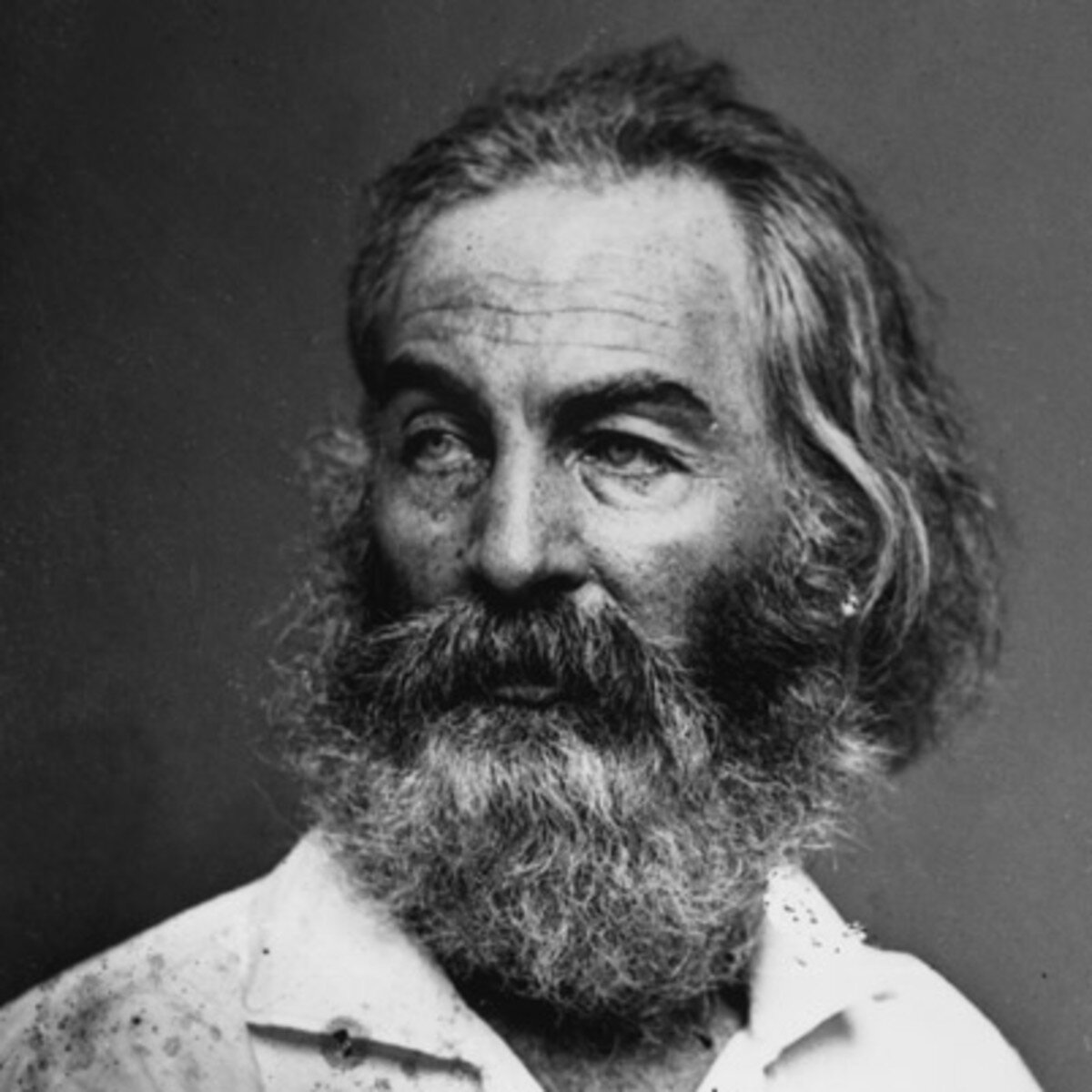
In his great elegy for Abraham Lincoln, Walt Whitman imagined walking in the company of death.

Then with the knowledge of death as walking one side of me,
And the thought of death close-walking the other side of me,
And I in the middle as with companions, and as holding the hands of companions,
I fled forth to the hiding receiving night that talks not,
Down to the shores of the water, the path by the swamp in the dimness,
To the solemn shadowy cedars and ghostly pines so still. 

There, on the path by the swamp in the dimness, to the solemn, shadowy cedars, and ghostly pines so still, the poet hears a gray-brown bird singing its song.  The song, he tells us, is “the carol of death.”  It begins like this:

Come lovely and soothing death,
Undulate round the world, serenely arriving, arriving,
In the day, in the night, to all, to each,
Sooner or later delicate death…. 

To all, to each, sooner or later, delicate death.

One of the reasons we light candles on this day is because of the proximity of death, which comes, sooner or later, to all, to each.  Death is close at hand, waiting for Simeon, who sings a carol of his own death: Lord, now lettest thou thy servant depart in peace.  Sometimes we need to sing about death

We are so deeply confused about death.  We allow that death is the cost of doing business, on the one hand; while, on the other hand, death-defying medical treatment is often our fondest wish, our proudest accomplishment, and the thing for which we would stop at nothing.

We are haunted by the memory that we were barred from returning to the garden where the tree of life is guarded by cherubim wielding a flaming sword.  And so death became our natural enemy.

But what unfolded in the Temple on that day in front of Simeon and Anna was the first sure sign that death’s power was losing its grip, and that even death could be sanctified by the One whom it would not be able to hold in its grasp.

When Simeon sings, it is about a holy death, now possible because of the salvation prepared for all people by the One he held in his arms.  And the light that lightens the Gentiles, and the glory of Israel about which he sings are a light and a glory meant not merely for the streets of Jerusalem, or Constantinople, or Philadelphia, but to shine beyond the grave, toward the promise of a new and holier life in a new and holier city, visible at that the moment only to the cloudy eyes of an old man and an old woman, but promised to all.  St. Luke tells us that the response of Simeon and Anna to this sight was to say something, but I think we can be confident that each of them actually sang something.  Sometimes we need to sing about death.

Listen to another stanza or two of the carol of death sung by Whitman’s gray-brown bird, and notice the absence of fear.

Dark mother always gliding near with soft feet,
Have none chanted for thee a chant of fullest welcome?
Then I chant it for thee, I glorify thee above all,
I bring thee a song that when thou must indeed come, come unfalteringly…. 

Over the tree-tops I float thee a song,
Over the rising and sinking waves, over the myriad fields and the prairies wide,
Over the dense-pack’d cities all and the teeming wharves and ways, 
I float this carol with joy, with joy to thee O death.*

On the feast of Candlemas, bidden by Simeon and Anna, we travel for a short while with the knowledge of death as walking one side of us; and the thought of death close-walking the other side of us.  And we in the middle, as with companions, and as holding the hands of companions.

Sometimes we need to sing about death as an antidote to the burdensome memory of the angel and the flaming sword that guards the gates of paradise, and the tree of life that grows there.  For a new gate has been opened to us, to a new life in a new paradise.  And there is nothing left to fear, if we have put our trust in the One whom Simeon held in his arms.

At the end of Whitman’s poem, he recalls the carol of death, and describes “the song, the wondrous chant of the gray-brown bird” as an “echo arous’d in my soul.”  If I could name that gray-brown bird, I would name him Simeon, and I would thank God for the echo of his song, aroused in my soul, because sometimes we need to sing about death, especially when both faith and grief are raw and immediate.

Yes, thank God for that echo aroused in my soul:

Lord, now lettest thou thy servant depart in peace,
according to thy word.
For mine eyes have seen thy salvation,
which thou hast prepared before the face of all people.
To be a light to lighten the Gentiles,
and to be the glory of thy people Israel.

Glory be to the Father and to the Son, and to the Holy Ghost.
As it was in the beginning is now and ever shall be, world without end.  Amen

Preached by Fr. Sean Mullen
The Feast of the Presentation of Our Lord in the Temple, 2020
Saint Mark’s, Locust Street

* All non-scriptural quotations are from “When Lilacs Last in the Dooryard Bloom’d” by Walt Whitman, 1865

Posted on February 2, 2020 .

The Only Way to Fish

The Only Way to Fish
Father Babin

Not long ago, I entered an abandoned church for the first time and felt an odd combination of emotions: sadness at the seeming absence of life there, but also hope at the possibilities for future life in that place. The most poignant scene during my tour of this vacated building, was in an upstairs room, which had been partially frozen in time. In that room, there was an empty paint bucket, with a brush stuck in it, fossilized in congealed paint. It was as if the painter heard the church was closing, stopped painting, and fled.

In my mind, I tried to visualize what had happened there. What would have caused the painter to flee, leaving his or her bucket and not even bothering to clean up? Did they finish their painting and just not care about leaving the cleanup for someone else? In an otherwise largely empty building, why would there still be a paint bucket with a brush stuck in it? Surely, it wasn’t a modern art exhibit. Or was it?

I couldn’t help but wonder if the painters in that church had fled out of anxiety or fear that they were in over their heads, trying to spruce up a building that was rapidly deteriorating. And I also wondered if those who closed up shop, without even bothering to wash their paintbrushes, knew what they were being called to. Or did they only know what they were running from?

If only we could have been flies on the wall—or more accurately, barnacles on the boat—just a few minutes after Jesus called his first disciples. What a poignant scene that must have been!

On one part of the lake (because the Sea of Galilee really is just a lake), a few minutes following Jesus’s call to Peter and Andrew, there is an abandoned boat with a net attached to it, floating aimlessly, a bit lonely there all by itself, with no reasonable explanation for why it was vacated. The call of the first disciples occurred so suddenly and the disciples’ response was so hasty—you might even say impetuous—that the casting net was not even drawn in.

It must have been a strange sight, accompanied by many questions. What happened to the fishermen in the boat? Why did they leave in such a hurry? Did they know what they were being called to? And what about those poor fish still trapped in the net, the catch waiting to be pulled in?

And then, just a little farther down the shore, there is an even more heartbreaking sight: a man named Zebedee is sitting in the middle of another boat surrounded by a bunch of nets that are still in need of mending. Some of them are freckled with gaping holes after years of hard use. Others are frayed in various places. And this father is sitting in the boat, all by himself, still in disbelief that his two sons James and John have abruptly left him alone with mending that must be done and work left to be accomplished. They up and left him, all in order to follow a stranger who invited them on a journey.

Unlike Luke and John, nowhere does Matthew suggest that Peter, Andrew, James, and John had a previous encounter or relationship with Jesus. We have no reason to assume that they had even seen or heard of him before he walked by their boats and summoned them. And so if we let only the details that Matthew provides speak for themselves, this call of Jesus’s first disciples is bizarre indeed.

The Gospel passage we are handed today is really a series of three discrete scenes: Jesus’s proclamation of the kingdom of heaven that has drawn near, the call of the first disciples, and then the real beginning of Jesus’s ministry in Galilee. The calling of the disciples is the center scene of this dramatic triptych.

On a literary level, Matthew focuses our attention on this centerpiece by shifting from the past tense to the present tense with Jesus’s powerful words to Andrew and Peter. We don’t get this startling effect in the English translation, but in the original Greek, it grabs your attention. Let’s hear it in that version.

“As he walked by the Sea of Galilee, he saw two brothers, Simon, who is called Peter, and Andrew his brother, casting a net into the sea—for they were fishermen. And he says to them, ‘Follow me, and I will make you fish for people.’ Immediately they left their nets and followed him.” Now, no English teacher would accept that use of tenses!

But as Matthew shifts to the present tense—or the historical present—with his narration of the calling of the disciples, we, disciples in 2020, are drawn right there into the boat with them. It’s as if Matthew knew that millennia later, readers of his Gospel would still be stuck in the boat.

We might say that this story of the call of the first disciples is a parable for us, the church. We are, after all, disciples of Jesus, and so Jesus’s call to those Galilean fishermen is likewise a call to us, to be fishers of people. And we might very well assume that we have left our boats and are following Christ—and in some ways we have.

But the real question is whether a part of us is always stuck back in the boat from time to time. Have we really and completely left our nets or boats or paint buckets to follow Jesus’s call? Or are we often unable to leave the boat, and the casting and mending or the painting in a lonely church room?

If we’re honest with ourselves and survey the landscape on the shore where the church gathers and engages in ministry, it can seem like we are very much still in the boat. Like those first disciples, before Jesus’s call to them, we in the church are doing the same old things: hanging out in the same old boat, casting the same old nets into the same old water, and drawing back in the same old catch.

Sometimes the catch includes new kinds of fish, but often, it’s the same kind. And the nets we’re using, well, they’ve seen better days. More often than not, they are filled with gaping holes. In some cases, these nets have become too loose to hold any fish. They are stretched beyond effectiveness when some in the church lose their nerve in boldly proclaiming why God’s good news is indeed such good news. In other places, the church’s stretched nets betray a state of embarrassment, perhaps, about who she is or where she has been as a community of disciples.

Some of these nets make no demands and expect nothing of the people we hope to catch. The fish are constantly slipping out of our grasp, because the nets just don’t work. In order to keep things going, we find ourselves, like that first class of disciples, constantly going back to the boat to mend the nets. Maybe if we just patch up the hole a little better this time, all will work out. If we spice up our worship with more gimmicks and fresh expressions, the nets will catch the fish we so desperately want to reach. If we simply focus on the nets, we will eventually fix the problem.

Not a few disciples find themselves anxiously tightening the nets in their mending in order to patch up those vexing holes. Or they renew the vigor with which they cast their nets into the lake, or they try for another part of the lake.

The tragic history of the church and her nets has, at various times, been ineffective at its best and disastrous at its worst. The nets that the church has cast into the sea in attempts to catch people have been tightly drawn and solid, with no holes or room for air. And the fish have been suffocated because of rigidity, lack of creativity, and a narrow zeal for what is assumed to be the Way of Jesus. Christians have proved unproductive as fishers of people because with their constricted nets, they have actually, inadvertently, squeezed out the love of God.

And so, our quest as a church of disciples constantly vacillates between different ways of casting the nets or maverick ways of mending them. Or on a more apathetic level, we keep our nets in good order, and we simply keep casting them into the lake, day after day, yes, with faithfulness, but with no real confidence that we will yield a catch. Or we cast with facile ignorance of the fact that there are hardly any fish in the nets when we draw them in.

So, it might be that we are indeed still stuck in the boat, trying to spruce up our fishing business all by ourselves. But that’s a recipe for burnout. And so we are desperately in need of a call out of our mundane, tired existence into a reinvigorated life of discipleship.

The problem is that the casting and mending business is so comfortable. The basic mechanics of casting and mending nets are not all that difficult to grasp, even if they don’t produce the results we want. Much scarier, though, is the voice of Jesus calling to us on the shore—yes, here in the present—an abrupt summons to leave everything and follow him. If we pause a bit from our restless mending and compulsive casting of nets, could we, like those first disciples, hear Jesus calling us to some specific place or task?

If instead we continue to focus only on the boat, we might find ourselves missing the voice of Jesus on the shore, beckoning us to drop our nets and forget about our mending and leave the boat to follow him.

A call from the boats doesn’t mean we don’t return to the boats from time to time to cast and mend again. In some sense, those practices need to be a regular part of our existence. But Jesus’s call to Peter, Andrew, James, and John extended their experience in the boat into new territory. They were invited out of the boat, out of the regularity of their predictable lives into the world. They were called to get behind Jesus and follow. They were called to be closer to Jesus. We are called to be closer to Jesus.

Jesus did not ask his first disciples to abandon their vocation. He sharpened their vocation as catchers of fish into catchers of people. So he does with us. This way of fishing doesn’t happen only from the security of the boat or from trying new tactics or mending the same old nets. This fishing happens when we put ourselves closer to Jesus, right at his back, and as we follow him into the arms of God.

What might that look like for us? What is going to put us closer to Jesus in our response to God’s call? Our work as discipleship is not so much about casting or mending the nets but about following what Jesus wants us to do, not what we think we need to do.

The challenge is knowing exactly where we are being called and to what Jesus is calling us. The call of Christ can easily be mistaken for a call to flee from a place of uncertainty or anxiety. I have a hunch that this might explain the abandoned paintbrush and bucket I saw in that abandoned church. In other cases, disciples have deserted their boats because they are tired and have just given up. The casting and the mending have come to be too much work for very little return. Or at times, they jump ship because the boat seems to be sinking. Does this at all sound familiar in the church today?

But God’s call to his beloved disciples is a call to something, not from something. It’s not a call to endless work or insatiable production or easy gimmicks to attract numbers of fish. It’s a call to get closer to God’s desires. And by following Christ, we find ourselves fishing for people.

And when we are in the boat, and when we are listening, and when we are open to being changed, transformed, and to having our vocations honed, we finally see Jesus walking by on the shore of life, calling to us as if from the past, but speaking directly to us in the present, and he says, “Follow me, and I will make you fish for people.” And we find ourselves leaving it all—the casting and the mending, even the painting—because we know that the only way to fish is to follow him.

Preached by Father Kyle Babin
26 January 2020
Saint Mark’s Church, Philadelphia

Posted on January 26, 2020 .