
John in Prison

John in Prison
Mother Johnson

The last we saw of John the Baptist in Matthew’s gospel, last week, was John by the side of the Jordan River, rendering judgment as the Pharisees and the Sadducees came to him to check out baptism.  “You brood of vipers!” he yelled at them. “Who warned you to flee from the wrath to come?” “The axe is already at the root of the tree,” he insisted. He was certain that the coming of Jesus would be a decisive event, that Jesus would bring spirit and fire to the repentance John was preaching.  Jesus was the fulfillment of John’s purpose, the fulfillment of his prophecy, the realization of his life of faith.

But this week feels like a whole different gospel.  This week Herod, the thin-skinned tyrant who couldn’t bear to have his sins denounced—this tyrant Herod has put John in jail for telling the truth.  John may not absolutely realize it yet, but he is going to die at Herod’s hands. He’ll be executed because Herod can’t bear to look foolish in front of his dinner guests.  

So this is the fulfillment of John’s calling.  Announcing the arrival of Jesus means getting bogged down in a sordid story about Herod and his marriage and his reputation.  John is imprisoned until a dancing girl calls for his head on a platter, and then John is served up.  

I can’t help but wonder what John thinks when he hears the message Jesus sends to him in prison: “Go and tell John what you hear and see,” Jesus says. “The blind receive their sight, the lame walk, the lepers are cleansed, the deaf hear, the dead are raised, and the poor have good news brought to them. And blessed is anyone who takes no offense at me.”  I guess the implication is that it should be obvious. The kingdom is at hand, just as John promised it would be, and Jesus is the true King. The day of God’s mercy has arrived. Grace flows out upon humanity.

The word that Jesus sends to John is a word derived from the prophet Isaiah.  It’s a word meant to reassure John that Jesus is the one Isaiah foretold. Now, not infrequently, when Isaiah speaks of the healings and miracles that are signs of the coming of God’s chosen one, Isaiah includes the idea that prison doors will be opened.  Perhaps John remembers this passage from Isaiah forty-two:  

Thus says God, the Lord,  who created the heavens and stretched them out,  who spread out the earth and what comes from it,who gives breath to the people upon it and spirit to those who walk in it: I am the Lord, I have called you in righteousness, I have taken you by the hand and kept you;I have given you as a covenant to the people, a light to the nations, to open the eyes that are blind,to bring out the prisoners from the dungeon, from the prison those who sit in darkness.

“I have called you,” says the Lord.” I have taken you by the hand. I have given you as a light to the nations.” This is familiar prophetic language, a familiar image.  Our psalm for this morning uses it too: 

[The Lord] gives justice to those who are oppressed, *and food to those who hunger.

The Lord sets the prisoners free;the Lord opens the eyes of the blind; *the Lord lifts up those who are bowed down.

Much of this is true to John’s experience.  Like Jesus, John has been called and chosen, and his life has been marked by sign and miracle.  But then there is this possible stumbling block: “I have given you as a covenant to the people…to bring out the prisoners from the dungeon, from the prison those who sit in darkness.” If John remembers his scriptures, John will remember that opening the gates of prison will be part of the sign of the coming of the Lord.  “The Lord sets the prisoners free.” And here John sits in prison, the door firmly closed.  

“Are you the one,” John asks Jesus, “or should we be waiting for another?”  The question is heavy in the air. Note that John doesn’t accuse Jesus of forgetting him, or of failing to bring the promised liberation.  John hasn’t made up his mind about Jesus. John actually hasn’t given up hope. John asks Jesus himself for clarification. “Do you understand what’s happening to me?” he might be asking.  “As the greater prophet, as the one I recognized and baptized, as the one to whom I testified, what is your explanation for the suffering of the present moment? Why does Herod—bloated, fatuous, frivolous Herod—why does he have this power over me?”

If you are here this morning thinking that the preacher has an answer, that someone here in the pulpit can explain away the torment and failure of John’s moment or of our own, please hear again the response that Jesus sends to John: “What have you seen, John?  What do these others tell you about me?” Jesus doesn’t offer an explanation or discount the question John asks. Jesus doesn’t diminish either John’s suffering or the power of the revelation at hand. Both are real. The relation between them is a matter of faith for us and for John and his disciples.  What’s so profound to me about this exchange between two anointed prophets—one the son of God—is that John trusts Jesus with the sorrowful question, and Jesus trusts John to bear the mysterious answer: this is the coming of the kingdom, the world is transformed, and your part of that is to experience persecution.  It’s striking, then, that Jesus ends this passage with a statement of faith in John, not John in Jesus—“A prophet, yes, and more than a prophet”—and Jesus also makes his statement of faith in us. The least person in the Kingdom of Heaven, he says is greater than John. 

What we have known, what we have seen, the falling away of sin and weariness, the quickening of our hearts, the clarity of the vision we’ve been granted, all of that lives side by side with the disheartening and sometimes terrifying reality of the wasted human life all around us.  Tyrants rage and tyrants protect themselves from judgment. Prophets suffer. The innocent suffer, in ways too numerous to recount. Creation groans. And God reaches through, still. Jesus is a light to the nations, still. Today. Darkness gathers but it does not conquer light.

Every time I see you here, I know that God has triumphed again.  I know it not because all is well in the world, but because grace has acted enough on you to get you on your feet and into the pew.  I may not know the details, but I know the general story: either you are here with a fresh sense of gratitude and rejoicing for the coming of God’s kingdom as you have experienced it, or you are here because, like John the Baptist, you trust Jesus enough to ask him for help and clarification and reassurance.  From whatever prison you are in. Whatever tyrant has power over you. Whatever your fears or misgivings. Whether it feels real or half-imaginary today, something has set you free to turn to Jesus. And Jesus has trusted you to live into the mysterious, difficult coming of his kingdom. That’s what brings you here, even if you think this is just a casual visit.

So I know that your calling is prophetic.  I know that we are here today as a prophetic assembly.  We are here as the assembly of the faithful who give innumerable forms of witness to the power of God in Christ.  Never take this for granted. Never take for granted the presence of the person in the pew next to you. Never take your own presence here for granted.  Comfortable though this may seem, it is an act of prophetic witness. You trust something about the word Jesus has spoken. You brought yourself here to express your gratitude and your need.  By God’s amazing grace you brought yourself here, and you keep this happening.

We gather here this morning, on a particularly cheerful occasion—Gaudete Sunday.  This is the Sunday when the deep violet of waiting in Advent turns into a fair rose color, a sign of joyful expectation.  It’s jarring to speak of John the Baptist on a day like this. It’s hard to think of that wilderness figure, railing against sin, giving his life for truth, suffering the hardship of doubt and anxiety—it’s hard to speak of him when I’m dressed like this, and standing in an exquisite pulpit in a beautiful church in the fashionable section of town, surrounded by people I frankly love.  I’d probably want to see you guys this morning no matter what you were doing. But meditating on John’s fierce witness teaches me something about yours. It may look different right now, right here on Sunday morning, but your vocation is the same as John’s. In doubt, in hope, in fear, and in rejoicing, when it’s hard and when it’s easy, you trust Jesus with your life. If you need reassurance you come here to get it.  If you are grateful, you come here to show it.  

This is a triumph of grace.  This is sight, given to the blind.  This is cleansing and healing and resurrection.  This is a risky, intimate witness to the coming of the kingdom.  I marvel at your prayer, at your faith, and at your presence here.  This is Guadete Sunday, a day when the church bids us rejoice, so I bid you as the church has bid from ancient times: rejoice in the improbable, miraculous power that you have known, and in everything God has done for the person next to you.   Rejoice in what Jesus, the true and living God, has done among us. Rejoice in the Lord, always.

Preached by Mother Nora Johnson
15 December 2019
Saint Mark’s Church, Philadelphia
Posted on December 17, 2019 .

A Different Kind of Urgency

A Different Kind of Urgency
Father Babin

A recent article[1] in the New York Times described the day-to-day proceedings in Amazon.com’s warehouse BWI2 in Baltimore. With fourteen miles of conveyor belts and twenty-seven acres of floor space, this warehouse embodies Amazon’s calculated response to the demand for fast delivery and economical prices.  And in warehouse BWI2, Amazon has implemented a system of cool efficiency to ensure that quotas are met and the material cravings of a consumer society are satisfied.

The Times noted the extent to which computers have become the arbiters of which workers keep their jobs and which ones are fired. Computers are eerily adept at registering how many items have been scanned and properly stowed at the myriad worker stations in the warehouse. Once an item is scanned, the clock starts its judgmental countdown: One, two, three, four. . . The effectiveness or ineffectiveness of each employee is duly registered, and when the computer spits out the data from its surveillance, those who are deemed inefficient are ultimately subject to being fired if they don’t step up their game. The wheat is separated from the chaff, you might say.

Some workers thrive off this clear-cut but demanding environment. Others realize quickly that they can’t keep up with the pace of production necessitated by the public’s voracious appetite for more. One worker noted that she quit her job after the second warning that she wasn’t measuring up to the expected standards of the assembly line. She knew that a third warning would be grounds for dismissal. Even as I speak, at warehouse BWI2, the timers at countless stow stations tick away: One, two, three, four. . .

And here we are, at what seems like the beginning of Advent, yet we are only two weeks away from Christmas. Can you hear the clock ticking its countdown? We expect a sense of urgency in Advent. Each day, in this all-too-short season, we cross off another date on the Advent calendar. We hope to get in all the wonderful Advent hymns, when there really just aren’t enough Sundays to sing them all. We are one, two, or three days closer to that moment when the gifts must be purchased, wrapped, and waiting under the tree. We find ourselves caught up in the frenzy of the shopping season. And these days, if we didn’t start knocking items off our gift lists back in October, we are already behind.

But even ignoring the superficial, materialistic urgency of this time of year, an urgency that is so often divorced from the Gospel, we still find ourselves face to face with Scripture passages like today’s Gospel, one full of urgency. It’s hard not to be struck by the exigency of St. Matthew’s tone. John the Baptist barges onto the scene in chapter three with all his wildness and strangeness, feverishly crying out for repentance and directing our eyes to the horizon where the kingdom of heaven has drawn near. John doesn’t shy away from announcing God’s judgment of humankind. “Repent!” “Bear fruit worthy of repentance!”

There is, too, that terrifying image of the ax lying at the root of the trees. Jesus is coming with his winnowing fork to separate the wheat from the chaff, and the chaff will be consumed with unquenchable fire. Can’t you just hear the counting of the clock, the seconds ticking away until the ax swings?

One, two, three, four. . .

And confronted with these dire warnings from St. Matthew, it’s difficult not to be anxious, because if the kingdom of heaven has indeed drawn near, and that clock is ticking away towards judgment day, and the ax is lying at the root of the tree, and there is a raging fire waiting to devour the chaff, it seems like there is no time to waste. We must act with haste or face the painful consequences.

We can sense the adrenaline coursing rapidly through our veins. Our hands begin to sweat. Our heart rates increase. We freeze up because this voice crying out for us to repent is so harsh and strident, and we have been caught off guard in our laxity. We’ve been surprised and found sleeping on the job, and we need to wake up and do something.

And when we do turn around—if in fact, we do turn around—to face the horizon of the dawning kingdom of heaven, its light breaks upon our messed up world and reveals just how much we have gone astray. But how are we to take that next step and bear fruit worthy of repentance? How are we to measure up to the spiritual demands made of us? And meanwhile, that cold, calculating clock continues its merciless ticking: One, two, three, four. . .

It’s easy to point our fingers in hindsight at those wily Pharisees and Sadducees who arrive on the scene where John is baptizing. It’s easy to single out those we believe to be contemporary Pharisees and Sadducees. But, I wonder, does the light of the kingdom of heaven, illuminating the horizon, expose our own complacency and contentedness? Has the daily regimen of religious faithfulness become too comfortable? Is our spiritual heritage as heirs of Abraham seen as a right that has made our citizenship in the kingdom of heaven no more interesting than holding a driver’s license? Is there, among some of the most faithful, a secret or overt pity for those who are not endowed with Anglo-Catholic richness or Episcopal privilege? Is it easy to forget that every moment is a rich gift and that everything taken for granted could change on a dime? True, baskets of beautiful, ripe fruit can be recognized and appreciated for what they really are, but before long the fruit is rotten and is no longer fit for consumption if it just sits in the basket.

As we do our spiritual about-face and turn towards the dawning of the kingdom of heaven, its light illuminates the severe darkness of our world. The voice crying into the wilderness of our day echoes down the hollow halls of an empty culture that has neglected its values or sold them off for cheaper prizes. We see more clearly than ever the battlefield of dead trees, severed from their roots by the ax of God’s judgment, all of which reveals how humanity has profoundly failed to bear fruit worthy of repentance.

The timer ticks away towards the day of reckoning, and yet another statistic of a violent death, so numbingly common, fails to create a sense of urgency, an expectation that indeed something could change. Yet another year in which we still need to provide boots for our brothers and sisters who are in need of solid footwear in extreme weather, and the rift between poor and rich only gets wider. Yet another article in the paper on the alarming prospect of irreparable damage to the environment provokes our anxiety, and at the same time finds us staring at the relentless clock, waiting for the alarm to go off, feeling helpless and incapable of doing anything fruitful. Tick, tick. One, two, three, four. . .

And so is it any wonder that people want to flee from any talk of judgment? Many prefer St. Luke’s general emphasis on exalting the lowly to Matthew’s frequently harsh language of judgment spewed forth by the hot, foul breath of a locust-eating wild man.

But we can’t avoid the reality of judgment. And if we inhabit a culture so sleepy and lazy with its own entitlement and riches, the discordant cries of a firebrand like John the Baptist are exactly what we need to shake us out of our sleep, turn us around, and point us towards the kingdom of heaven dawning on the distant horizon.

If we are so reluctant to discuss judgment, could it be that our view of God’s judgment has been co-opted and distorted by the secular judgment of a ruthless, mechanical, and materialistic world? In this world, pointing fingers, hypocrisy, double standards, and shaming are the marks of judgment. And for a worker at Stow Station 3312 in Amazon’s BWI2 warehouse, a ticking clock means ultimately being cast with the wheat or the chaff, being sent away jobless and anxious, with little hope for mercy.

But for us, as workers in God’s kingdom, the ticking clock is something different. It’s a hopeful countdown. Or perhaps more accurately, it’s a ticking forward into the future, which is not founded on fear or anxiety. It doesn’t end in sending people away empty. Working in God’s kingdom is not a cutthroat competition for recognition or reasonable salaries. The ticking forward of this expectant season of Advent is one that boldly marches towards the final dawn and realization of an age in which God will make all things new: every lost job, every fearful person, every unclad foot, every incurable illness, every act of violence that rends asunder the bonds of humanity.

Is it possible, then, to see God’s judgment as a gift? For a minute, let’s dispense with our terror of a ticking clock connected to a computer that will assess whether we are with the wheat or the chaff. Let’s reject the image of sitting for a timed exam that will determine our fate. Let’s forget about the horrifying images of what will happen to us when that alarm sounds. Let’s consider that God’s judgment is all about God’s justice, that judgment is exactly what this world needs because so many things need to be made new and so many wrongs need to be righted. But if we never see the error of our ways and if we never turn around back towards God, we will miss the light of his kingdom when it finally breaks fully on the horizon.

That ticking clock—one, two, three, four—is pushing us forward towards a time when we can hope to be delivered from the sin and evil that surround us. In that day the wolf shall live with the lamb, and the leopard shall lie down with the kid. There will be unending peace among all of God’s children. And the earth will be full of the knowledge of the Lord as the waters cover the sea.

But if we believe that it’s solely up to us to produce the fruit worthy of turning this world around, then we will be hopelessly frustrated. This is the rub: we are to bear fruit, but we can’t do it alone. Because if we do, we will be anxious and afraid, and we will never feel up to the task. We will be incapacitated by fear before a ticking timer in our private stow stations as we seek to meet the incessant demand for more and more and more, helpless before the tick of the clock.

One, two, three, four. . .

God is calling us to trust in his power to cast away the works of darkness. The tick-tock of the clock becomes the metronome that pulls us forward at a joyful allegro towards the New Jerusalem. Our hopeful expectation and our blissful sense of urgency are rooted in God’s promise to us, a promise that will equip and inspire us to bear fruit.

So, the timer counts down—one, two, three, four—and each moment, each tick, is a reminder to savor the pregnancy of this season of expectation. We are right to feel impatience for the sake of the Gospel, to long with every ounce of our being for God to step in, to act, and to save this world floundering in its waywardness. And I wouldn’t stop you if you were to leap up from your pews right now to run towards the breaking dawn of that kingdom of heaven, not out of anxiety but because you are so ready for everything to be made new.

Preached by Father Kyle Babin
8 December 2019
Saint Mark’s Church, Philadelphia

[1] “Prime Mover: How Amazon Wove Itself into the Life of an American City,” The New York Times, November 30, 2019.

Posted on December 8, 2019 .

Speak It Clear And True

Speak It Clear And True
Father Mullen
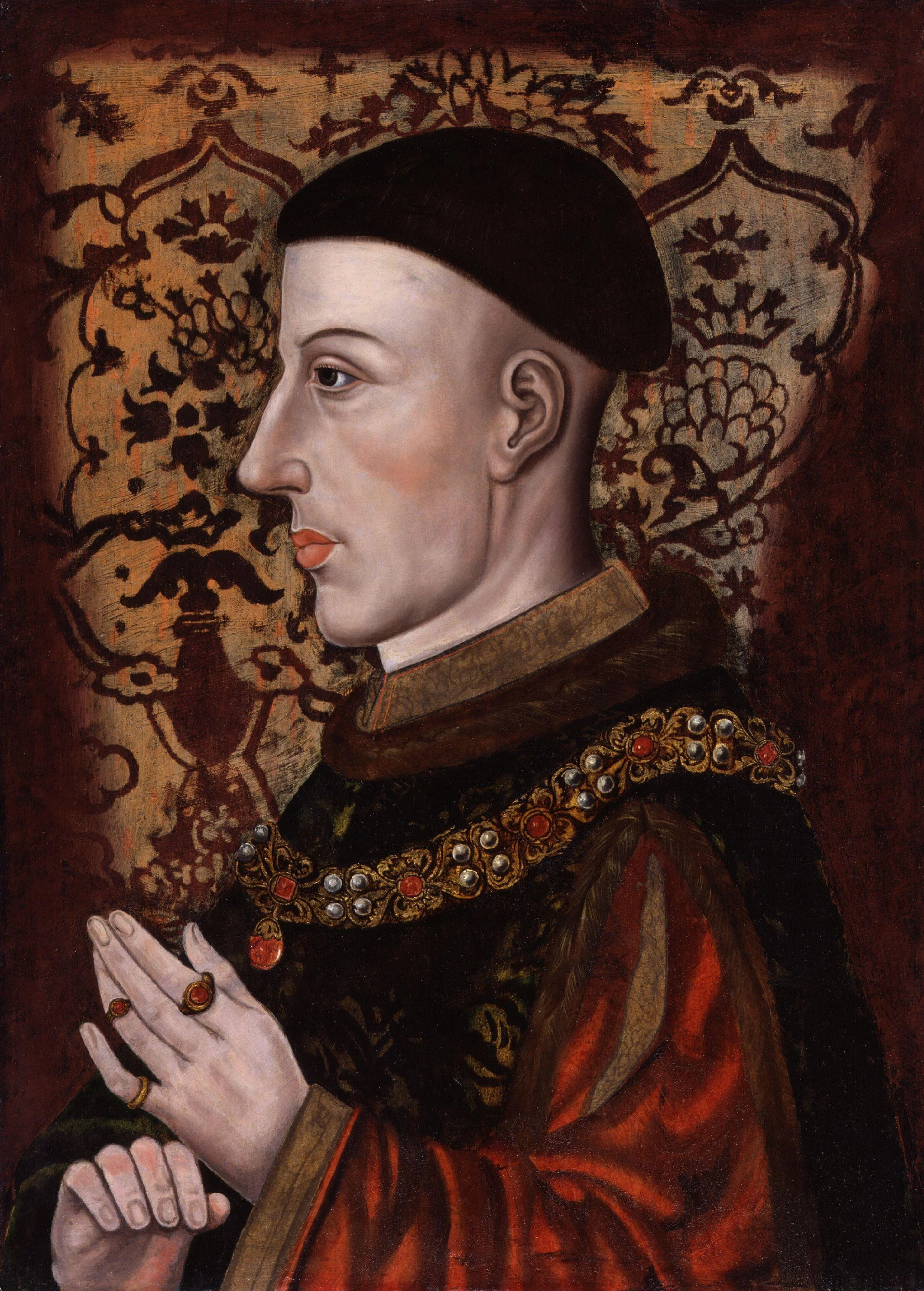
Henry V

Henry V

There is a scene in “The King,” the most recent film version of the story of King Henry V, that takes place in the English camp on the night before the Battle of Agincourt.  The young King Henry, who’d been reluctant to lead his men into battle, confides in his friend Falstaff not only that he is apprehensive about the operation ahead of them, but that he has come to doubt the wisdom of bringing the battle to France in the first place.

“Here we are on the eve of this fight,” says King Henry, “and I am scared to wonder, to tell it true, why we are here.”

Falstaff gives him a direct response: “You best discover the answer for that,” he says.  “The men out there deserve it. They’ve given their lives to you. I cannot say what forces have conspired to bring you here, but these men need you, just as you need them. These men deserve your confidence. And if you cannot give them that, at least then tell them a magnificent lie.”*

The speech that the king eventually delivers to his men, though rousing, is no match for the version that Shakespeare supplied for the lips of Henry V in his version of the story.  You remember how that one goes:

“We few, we happy few, we band of brothers; 
For he to-day that sheds his blood with me
Shall be my brother; be he ne'er so vile,
This day shall gentle his condition:
And gentlemen in England now a-bed
Shall think themselves accursed they were not here,
And hold their manhoods cheap whiles any speaks
That fought with us upon Saint Crispin's day.”**

I don’t often think of Shakespeare as an advocate of toxic masculinity, but there it is.

The question we might ask, if we could keep Kenneth Branagh quiet for a moment, is whether or not this great speech is anything more than a magnificent lie, justifying one more war.

It’s painful for me to recognize that under the category of “magnificent lies,” many people these days would include “religion” far above “war” on any list.  And many people might also put “God” at the top of the list of magnificent lies.  To them my sermons are more replete with lies than any speech that glorifies battle.

Part of the problem can be placed at the feet of the prophet Isaiah, who pops up in December as surely as cinnamon, nutmeg, and cloves.  His prophecies horn in on our preparations for Christmas with such insistence that we could be forgiven for imagining that John the Baptist was actually the first tenor soloist who ever sang “Ev’ry valley shall be exalted, and every mountain and hill made low.”  Similarly, we might suppose that the prophet himself intended a continuo harpsichord and cello to  accompany his words: “Behold, a virgin shall conceive and bear a son, and shall call his name Emmanuel.”

Does it matter much that few people put much stock in these prophecies anymore, and many find them poetic at best, and delusional at worst?  Is it only the good will of this season that prevents more people from concluding that such prophecies are little more than the fabric of a magnificent lie?  And Advent begins today with another doosie: “they shall beat their swords into plowshares and their spears into pruning hooks; nation shall not lift up sword against nation, neither shall they learn war any more.”

Even Jesus could be assumed to struggle with this one, since we hear him today telling his followers to “be ready, for the Son of Man is coming at an unexpected hour.”  “Like a thief in the night.” These are circumstances that might call more for swords and spears than for plowshares and pruning hooks.

If we want to know why the biblical message has become so unpopular we need only to read the Bible itself, and see for ourselves how dubious its words can seem to the world today.  How can anyone who reads the papers or watches the news believe that we or anyone else will ever beat our swords into plowshares, and our spears into pruning hooks, that nations will not lift up sword against nation, and that anyone anywhere might cease to learn war anymore?  Scholars tell us that this particular oracle of peace, that we encounter in Isaiah and which was repeated by Micah, probably pre-dates either of those two prophets, and so has been around for a long, long time.  But the longer history unfolds with far more swords and spears than there are plowshares and pruning hooks, the harder it becomes to take the prophecy seriously.

Why, then, does this text persist in our corporate memory, promising, as it does, something that seems so woefully beyond hoping for, considering the world we live in?  Has the moment at last arrived, when we should admit that this promise of peace must all be part of some magnificent lie?

In the film, “The King,” as in history, Henry V ends up marrying Catherine of Valois, the daughter of the French king that England had just defeated.  And in the film, it is Catherine who shows Henry how right he was to doubt the wisdom of bringing the battle to France.  She says to him, “It would seem that you have no explanation for what you have done. You have shed the blood of so many Christian souls, and yet, before me now, all I see is a young, and vain, and foolish man so easily riled. So easily beguiled.”

The war with France, she shows him, was a magnificent lie of his own telling, but Henry couldn’t see that until it was too late.  The problem for the king was that no one would speak to him “clear and true,” except his friend Falstaff, who now is dead, killed in the very field of Henry’s apprehension.  No one is left to tell the king the truth. But Catherine does.

Here we are at the outset of Advent, the beginning of the new church year, our preparation for the coming of our king, and the vantage point from which we gaze for a while into the distant future of the end of time when all of God’s purposes shall be fulfilled.  I cannot say what forces have conspired to bring you here, but you deserve to know, when you come to listen once more to the promise that swords will be beaten in to plowshares, and spears into pruning hooks; you deserve to know if it’s all a magnificent lie: the virgin, the manger, the miracles, the Man, the Cross, the Tomb, the Resurrection, the promise of peace, and the New Jerusalem.  And, of course, we few, we happy few, we band of brothers and sisters, who are here to be roused for the cause, whatever that cause may be.  Someone must speak clear and true, so I will try my best.

There is a vision of peace so ancient and so true, and so compelling in its simplicity that it has migrated from prophet to prophet, and from age to age, so that the hope it declares might be forever undimmed.  Though warfare long ago left its swords and spears behind, and though the plowshares and pruning hooks of the promise would be nearly unrecognizable to most of us, the unlikelihood of the esoteric and outdated imagery renders the oracle diminished not at all.

When the holy prophecy of peace becomes a hope so foreign, so distant, so remote, and so strange that it might seem to have been part of a magnificent lie all along, then what we are encountering is the work of a great Deceiver.  And when war sounds nobler than peace, its promises more appealing and attractive than the promises of peace, that is the work of the Deceiver being perfected to a high art.

Of course, in many places throughout the world, the Deceiver has infiltrated the church.  And it is a sad irony of our time that the law-enforcers have had to call to account those who were meant to be the truth-tellers. You begin to see the fruit of the covert operations of the Deceiver, who thrives in the shadows and deepens the darkness of those shadows just when light is needed most.

And should our eyes simply adjust to the darkness?  For this is the proposition of the Deceiver, as it is the proposition of war.  Get used to it, we are told, for this is the way things are, and only fools and the tragically naïve resist the good advice to simply let your eyes adjust to the darkness.  But somewhere in the deeper, holier darkness of our memories, we can remember the sound of metal on metal: something being worked on an anvil: a blade!  But the blade is not being made straight, smooth and sharp, it is being twisted and bent, blow by blow, re-shaped into a better tool that contributes to the sustaining of life rather than the taking of it.

Have you come to Advent Sunday apprehensive about what lies ahead, and doubtful of the wisdom of being here in church at all?  Here on the cusp of whatever is ahead of us, are we scared to wonder, to tell it true, why we are here?

We are here to haul out the anvil on which the blades of swords are worked into plowshares, and on which the points of spears are hammered into pruning hooks.  We are here to guard the flame that lights that work, and that sheds light on all the magnificent lies that we have told each other to goad one another into a long history of constant warfare, conflict, and antipathy.  We are here to sing of peace, precisely when peace has become so elusive that working for it may seem like a fool’s errand.  We are here because there is a Prince of Peace who went alone to the battle, and fought it mostly in silence, unarmed except for the power of God, which is to say the power of Love.  That Prince we have made our King, because Love never lies to us - not when Love speaks clear and true.

And when Love speaks clear and true she does not call us to arms, for her song is only ever of peace, and Love speaks clear and true when no one else will.  Love and Peace do not know how to lie, but the very dialect of war is falsehoods.  And the Day will come when Love at last overcomes all the work of the Deceiver, and she will look down on him and address him, clear and true, as only love can:

“It would seem that you have no explanation for what you have done. You have shed the blood of so many souls, and yet, before me now, all I see is a sad, and vain, and foolish devil, so easily riled, so easily beguiled, but nothing more than a magnificent lie, spreading more lies wherever you go.

“But now the day has come that they shall beat their swords into plowshares and their spears into pruning hooks; nation shall not lift up sword against nation, neither shall they learn war any more.”

Among all the magnificent lies that swirl around us, this truth is in danger of becoming a secret, as though it must wait for another day, another time to be revealed.  But although we know not the hour of his coming, we must never let this truth remain a secret - that his reign of peace will be established; that swords can be beaten into plowshares, and spears into pruning hooks; that nation need not lift up sword against nation, and we need not learn war any more!  Speak it clear and true!  For the Son of Man is coming at an unexpected hour with Love and Peace, and we, we must be ready!

Preached by Fr. Sean Mullen
Advent Sunday, 2019
Saint Mark’s, Locust Street

*quotations are from “The King” 2019, written by David Michôd and Joel Edgerton
** except this one which is from “Henry V”, Act IV, scene iii, by William Shakespeare

Posted on December 1, 2019 .