Rector's Note 11.12.26

Dear Friends,

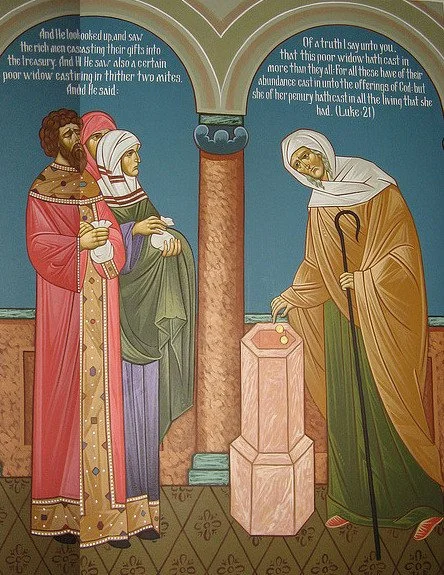
This Sunday is "Commitment Sunday" at Saint Mark's, when we will present our pledges for 2027 and bless them in church together. Thank you, very profoundly, to all of you who have already made your pledges, and to those who will bring them on Sunday. You may or may not know, pledges are the most important way Saint Mark's has to plan for the coming year: they are an indicator of our intentions to give a certain amount, and the total is what the parish then uses to finalize our budget. Pledges are not binding financial commitments, you can change yours at any time. But they are an essential planning tool for parish churches and all other organizations who rely on them.

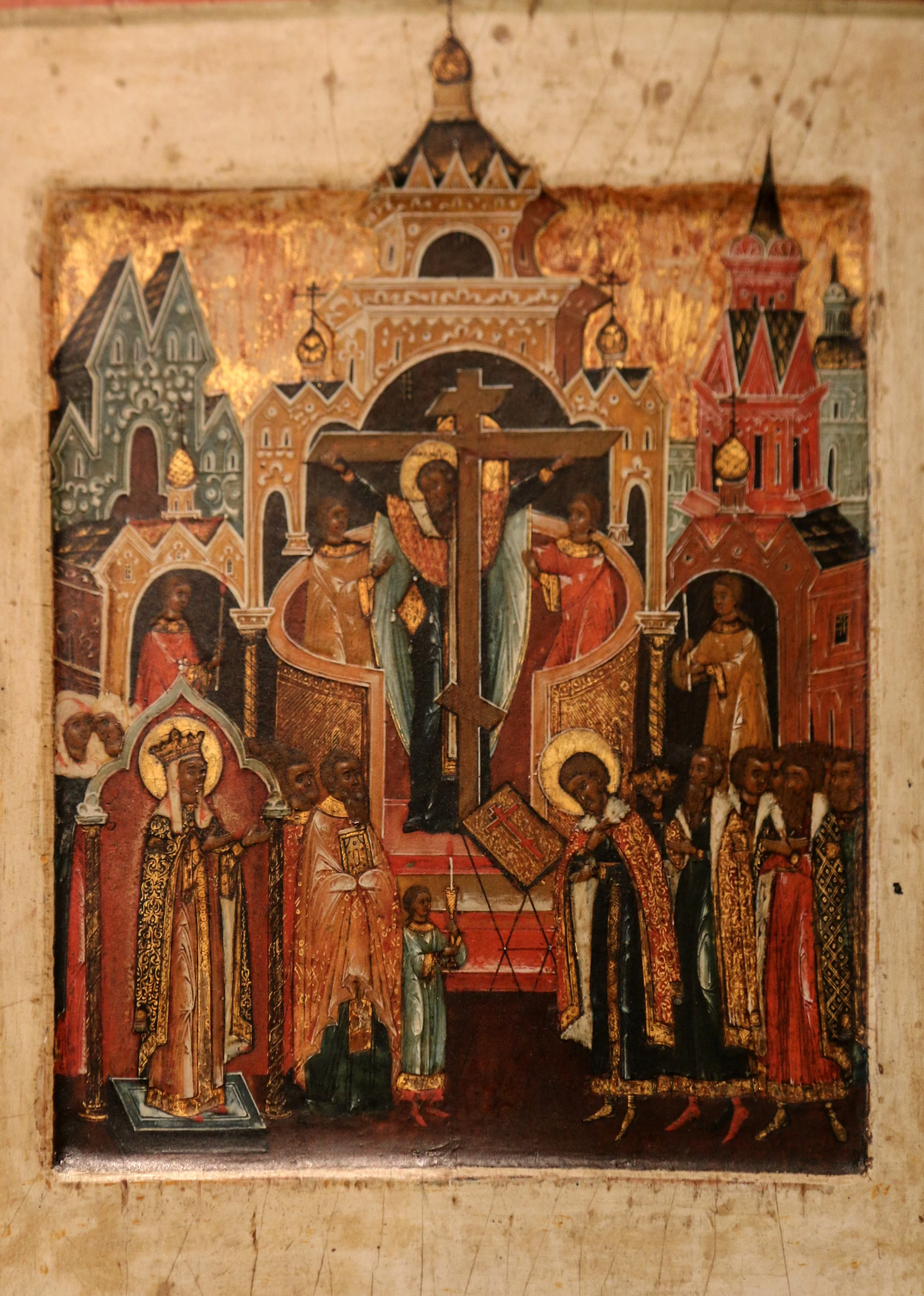
We call it "Commitment Sunday" because pledges do represent a financial commitment to the life of the parish, in a specific and measurable way. But there's a way in which every Sunday is Commitment Sunday, along with any time, on any day of the week, that we come to the altar of the Lord's sacrifice. By showing up at the foot of the cross, we commit ourselves to bearing witness to what we find there: the Son of God giving himself for the life of the world, making, from his sacrifice, a new humanity, a healed world, and the union of heaven and earth. We cannot go back to our old life after this: we commit to living in the new kingdom of his love, which requires that we choose our priorities accordingly.

It's not always easy, but there is a through-line of joy, as we root ourselves ever more deeply in God's economy of generosity. God continues to give us the gift of his Son, despite the many who refuse it, and the many ways I fail to live up to it. God continues to give, because it is God's nature to give -- to insist, beyond refusal, failure, and death, that life will have the last word. Or rather, that there is no last word at all, but only the eternal Word which God continues to speak, come what may. I hope this year's Commitment Sunday brings you some share and portion in that abiding joy, as we grow together as witnesses of Christ's redeeming love.

Yours faithfully,

Fr. Sawicky
Posted on November 12, 2026 .

Rector's Note 11.5.26

Dear friends,

It’s Thursday morning as I write this newsletter, but the memory of Monday’s All Souls’ requiem is still running through my mind. As I wrote in my memorial letter, Fauré is an old favorite, but I’ve never heard it sung more beautifully or better aligned with what was happening at the altar. Thank you to everyone who had a hand in offering that liturgy, and especially to our musicians and wonderful soloists!

We offer beautiful things to God because God is a worthy recipient of our best work. It’s also, I hope, deeply rewarding in itself, to make something together of surpassing worth. All Souls’ is especially rewarding because we offer it to God for the repose of the dead - who cannot give us anything in return; they cannot return our affection, asleep as they are in the Lord. In offering a requiem for them, we bring to the altar our own grief, our pain at love’s leaving off. We ask nothing for ourselves, only that God would grant that their rest be peaceful. But God’s response is to give us his Son, in Bread and Wine - in whom we enjoy unbroken communion with all who rest in him. 

A requiem, then, is not a lonely cry of grief into the void, but a pas des deux with God, in whom all our loves coinhere. It is a way of requiting the unrequitable, of bridging the gap, of letting love continue to speak despite the closure of all other lines of communication.

I think this must be part of what we experience as so moving about the All Souls’ Requiem: not only are our loves affirmed here in church, but there is some satisfaction too. In the act of making an offering on behalf of those we love but see no longer, we receive the gift of love’s continuation: mysteriously, by grace, and yet as surely as the sun rises.

It was a great privilege to keep this feast with you Monday night, and to pray for our beloved dead. Continue to keep them close in the days and months ahead. Let your love for them show you the way to the altar of God, and let the altar of God be the place where lonely and grieving hearts begin to be stitched back together.

Yours faithfully,

Fr. Sawicky

Posted on November 5, 2026 .

Rector's Note 10.29.26

Dear Friends,

At the 9am on Sunday, I commented that learning things by heart makes a big impact on our minds and on our spirits. Whether facts, faces, formulas, music, prayers, texts, or skills, the things we learn by heart shape our thoughts and reactions as much as the genes we inherit. This is why the Church has always commended the practice of committing so much of its sacred treasury to memory. Psalms, Sunday Gospels, hymns, prayers, and the others, all leave avenues for the Holy Spirit to work in us, even when we’re not at church or actively thinking about God.

And then, when we do set ourselves to private prayer or corporate worship, we can do so without looking down at our books, leaflets, or hymnals all the time. We can look up, or close our eyes; we start to notice other things than whether we’re getting the words right, start to feel that we are really moving when before we might have been just keeping up. These kinds of beginnings help expand our imaginations and make connections that we might not otherwise have made. They introduce us to a world entered through a text, but which we can only properly inhabit through a far broader constellation of relationships.

Which is one of the great pleasures of Saint Mark’s musical tradition: author, composer, singer, conductor, organist, acolytes, congregation, the room itself, all meet across centuries and continents, to make music in praise of Almighty God. If I can listen with the ears of my heart and not just read with my eyes, I can hear that the church is far more crowded than it first appears: it is full of all the people, central and peripheral, in the lives and backstories of all the living and departed who have had a hand in creating this music. It’s likewise full of the same crowd of prophets, apostles, and anonymous authors whose writings make up the Bible, not to mention the hundreds of saints whose images fill our church and whose feasts punctuate our calendar.

As All Saints and All Souls draw nearer, then, I encourage you to consider putting some portion of the Church’s sacred treasury to memory. Perhaps a favorite hymn or anthem text, or a frequently used Psalm; maybe a particularly impactful Sunday Gospel or parable; maybe one or more portion of the mass ordinary, or the evening prayer canticles, or the office of compline; or the Angelus or one of the four Marian antiphons. Whatever you choose, I hope you find it a doorway into a larger room, a larger world, free of the page, book, or screen.

Yours faithfully,

Fr. Sawicky

Posted on October 29, 2026 .

Rector's Note 10.22.26

Dear friends,

With stewardship season upon us, and planning nearing readiness for Advent and Christmas, we are entering the annual repetition of patterns and celebrations by which the church both secures its near-term material future and is reintroduced to the mystery of the Word made flesh. The church is no stranger to repetition: seasonally through the year, across the days of the week, even through the hours of the day, we inhabit a series of intertwining cycles of prayer and memory by which we live into the imitation of Christ. 

At the end of the year, though, the stress and busyness of everything else can tempt us into thinking these cycles and seasons are just one more “add-on,” a bit of spiritual flavoring, that we can set aside or leave out as needed. And of course regular rest and refreshment is essential for us to function at our best. But the Gospel is not just a religious truth, and the life it commends amounts to more than a spiritual hobby. As theologian Herbert McCabe articulated years ago, the Gospel is not religious but cosmic, it changes something about the world, whether we believe in it or not. One of the things that means for us is that the parish church, our primary home as Christians, is firmly planted in something more lasting, more deeply true, than traffic, taxes, or even death. Our participation here amounts to a sustained effort at living according to a different vision, one which precedes, underlies, and waits at the end of all our other wanderings. 

As the joyful busyness of the holidays begins to loom, I invite you to find here at Saint Mark’s not just “one more thing,” but the place where all the other things can come to rest, held by the One who makes out of so many dissonant harmonies a single music of love.

Yours faithfully,
Fr. Sawicky
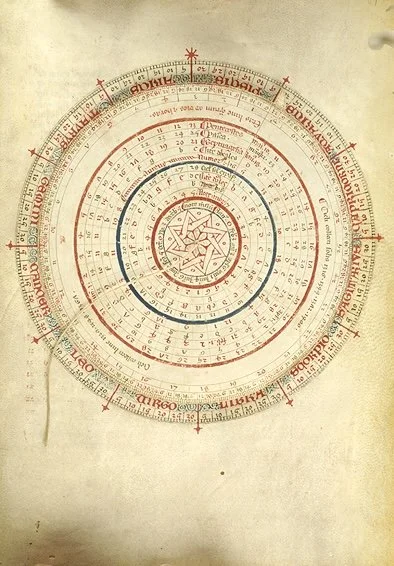
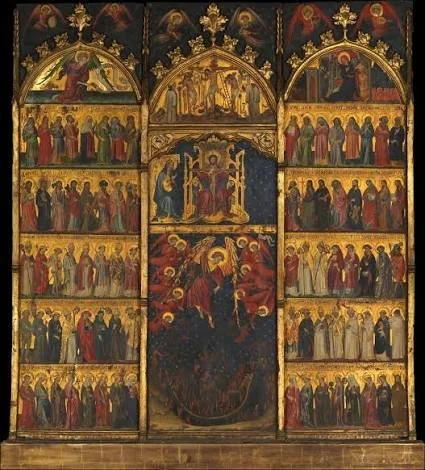
Liturgical calendar for Ravenna
Italy, Milan, 1386

Morgan Library & Museum

Posted on October 22, 2026 .

Rector's Note 10.15.26

Dear Friends,

Despite last Sunday’s rain, we had a good crowd of folks at the newcomer brunch after the High Mass. Many thanks to Eddie Smith and the committee for putting that together! It’s always a joy to meet people who have recently found their way to Saint Mark’s, because, among other things, it’s a reminder of so much that is good and beautiful about this parish and about what God is doing here. These newcomers bring a lot of joy and excitement to our church, and I’m very grateful to have met them. Now the task for all of us is to continue welcoming them, helping them to make a home here and to find a way of serving others that honors their gifts, interests, and growing edges.

This year we have a lot of newcomers on the staff as well: not just our new Ministry Residents, but our Curate and myself, too. With so many new faces, I am relying, even more than usual, on the fact that religion is something we “catch” from each other, like language, culture, or the flu — more than it is something we learn from a book or on YouTube. It is a learned skill, a way of communicating, of inhabiting the world, in relationship with God and with other people: real people, right here, ahead of me on the way to the communion rail, next to me getting coffee after Mass, chopping onions together on Thursdays for the Saturday Soup Bowl. We learn the faith, we learn who we are, from one other. There is something limited about this: this community, in this place, at this time, is concrete, not imaginary; it has weaknesses and blind spots, strengths and opportunities. Yet the more we pray together, the more we uphold one another, the more we share with one another what we know and have learned of God’s goodness and mercy, the more we will be caught up in the vision that draws us all to the altar week by week and year by year.

How do we go from newcomer to right at home? There is no more effective recipe than faithfulness over time. Our newcomers are bringing us their faithfulness and their time, and we give ours to them in return. These gifts are deeply formative for all of us, and teach us the faith as Saint Mark’s has received it. God always meets our faithfulness with faithfulness of his own (God also meets our lack of faithfulness with his own faithfulness, but that’s a different sermon!). Together we grow in love and grace, and begin to reveal to the world something of the household of God.

Yours faithfully,
Fr. Sawicky
Posted on October 15, 2026 .

Rector's Note 10.1.26

Dear Friends,

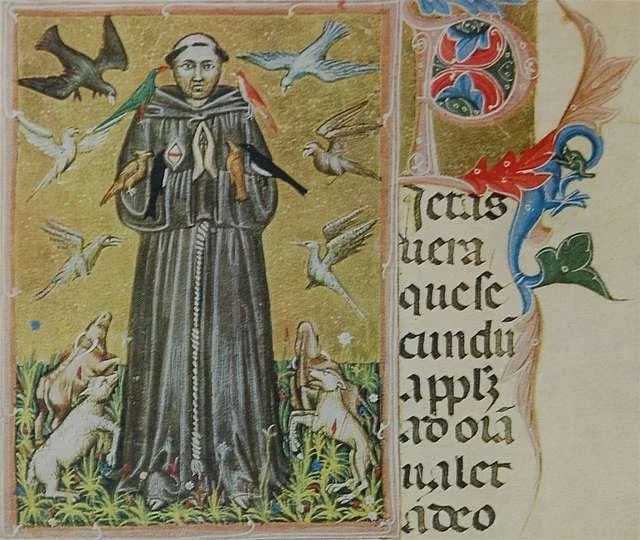
This Sunday marks the 800th anniversary of the death of St. Francis. In popular imagination, he’s a saint associated with animals, birds, and nature, a kind of free spirit who celebrated the good things of creation while remaining somehow apart from the problems of the world. But digging a little deeper reveals a man deeply aware of the world’s pains and griefs. A soldier in his city’s campaign against neighboring Padua, he was injured, captured and held for ransom as a prisoner of war. Revolted by leprosy and the unsightliness of the poor, his decision to renounce his family’s wealth and wed himself to Lady Poverty was a decision to embrace what appalled him rather than run away — literally, by embracing a leper on the street in the first flush of his new calling. 

Francis’s first mission was to rebuild, stone by stone, by himself, with his own hands, the little church of San Damiano outside Assisi. This is the work that attracted his first followers and would begin the Franciscan order of friars minor. Somehow, for St. Francis, bringing the joy of the Gospel into the darkest corners of human life entailed great care and attention to the actual physical buildings of the Church. We’re used to thinking of these commitments as standing in opposition to each other, at different ends of a spectrum, or at the very least in tension with each other. Yet for St. Francis, they belonged together, they were wrapped up in each other. The problem with wealth was not that it existed, but that it permitted an escape from the demands of loving God and our neighbor. Paying attention to buildings, bodies, and even the birds of the air was a way of saying we escape all these things only at our peril — peril of losing something essential about ourselves, of forgetting what it means to be human.

Celebrating the 800th anniversary of St. Francis’s death is a good opportunity to remember that the spiritual and material worlds belong together, both “out there” in the world at large and “in here,” in the church and within ourselves. Love of God entails love of neighbor — and vice versa. Heaven and earth meet in the person of Jesus Christ, and through him, in each of us as well. By the example and intercession of St. Francis, may we too refuse all escape, giving ourselves to the care and keeping of this world and its creatures, that the glory of God may shine through all the brighter.

Yours faithfully,

Fr. Blake

Posted on October 1, 2026 .

Rector's Note 9.24.26

Dear Friends,

I can’t say Thank You enough, to everyone who came to Saturday’s institution, and especially to the staff, musicians, servers, presenters, ushers, and volunteers who made it happen. It was a beautiful, moving experience for me, and I hope it was a day for the whole parish to celebrate what is so special about this community and its mission.

I was also really touched by the readiness of so many friends, colleagues, and former parishioners to travel so far for the occasion. We talk a lot about “chosen family” in the church, how life-giving and beautiful it can be. Often we find those people in the regular course of our lives. Sometimes they come as a set, after moving someplace new, taking a new job, or starting a new hobby. Other times, they find us when we most need them. It’s one of the mysteries of grace that some of our “chosen family” are people we might not have been drawn to, if they hadn’t shown up anyway. Yet, to a person, their love makes more of us than we could have been without them. 

In my life, I have had the good fortune of finding chosen family in all these circumstances and more, and I am deeply grateful now to count the whole parish family of Saint Mark’s among them. In my view, Saint Mark’s embodies the very best of the Anglo-Catholic movement, and it’s a great privilege to be your rector. I pray this family continues to grow, in strength and in courage, to embrace all whom God will give us to love, and that such love will redound to the healing of the world.

Yours faithfully,

Fr. Blake

Posted on September 24, 2026 .

Rector's Note 9.17.26

Dear Friends,

Between Homecoming Sunday and Saturday’s institution, I don’t want to miss at least mentioning this past Monday’s major feast: the Exaltation of the Holy Cross. You might know the story: the Empress Helena, on her (4th c.) expedition to uncover Christian sites in the Holy Land, was able to determine which of three crosses was the True Cross, because lepers were healed in proximity to the True. In my homily, I commented that this is always the test: the true cross is the one that heals. In a world where religion is frequently used to control, abuse, and sow fear, it’s worth remembering that the true cross is the one that heals.

Maybe you also know the old joke, that there are enough slivers of the “True Cross” floating around to build Noah’s Ark. That’s probably true. But if five loaves and two fish fed five thousand with whole baskets left over, perhaps it’s not an impediment to faith to think that the Cross has likewise multiplied. Perhaps it’s a late-breaking miracle of the Gospel that slivers of the True Cross will continue to multiply until there are enough for one to lodge in the heart of every person, where we can only pray it brings the same healing that Helena witnessed in Jerusalem: healing of spirits now as well as of bodies. If nothing else, this is a good starting point for understanding the life of the Church — a community of persons being healed by drawing ever nearer the Cross of Christ.

I’m looking forward to seeing you on Saturday for my institution as your fifteenth rector. Bp. Gutierrez will celebrate the institution, and the preacher will be Fr. Martin Warner. Fr Warner recently retired as the 103rd bishop of Chichester, but I knew him as my parish priest twenty years ago while I was an MA student in the UK. He was the first person to help me discern a vocation to the priesthood, and I’m really thrilled he’ll be here over the weekend. A new rector is always a new chapter in a parish’s life, and the future can’t help but bring many unknowns. Still, I hope this institution is an opportunity to celebrate and give thanks for the beauty and goodness of Saint Mark’s and the many graces God has given here over the last 177 years, as well as to commit this next chapter to his care and keeping.

Yours faithfully,

Fr. Blake

Posted on September 17, 2026 .

Rector's Note 9.10.26

Dear Friends,

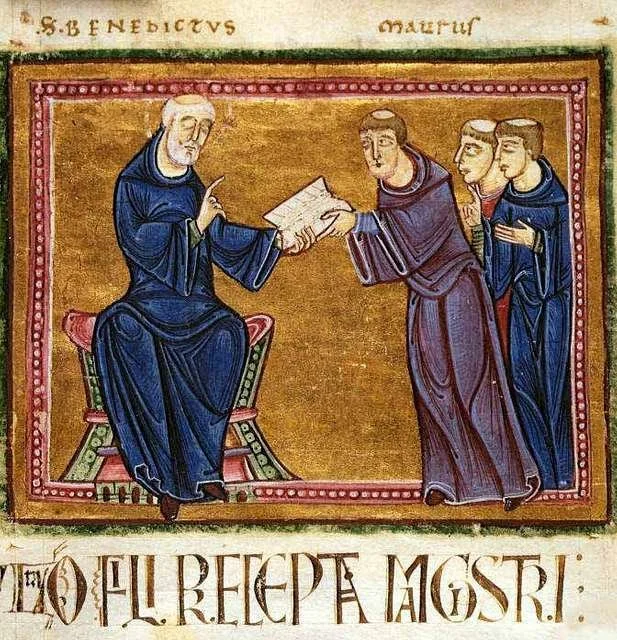
At the beginning of St. Benedict’s Rule, he writes that the purpose of Christian community, as he envisions it, is to be “A school of the Lord’s service. . . As we progress in our life together and in faith, our hearts shall be enlarged, and we shall run with unspeakable sweetness of love in the way of God’s commandments.” A parish church is not (thankfully!) a monastery, but the vision still applies: here is a community fed by strong Food; in whose fellowship we learn and grow as Christians and as human beings, plumbing ever more deeply the mystery of God’s love: in Christ, in our lives, and in the world. By this work our own hearts grow larger, our love grows truer, and we can enjoy more fully the grace that is given to us, in all the ways God gives it. 

As Homecoming Sunday approaches, with the beginning of Saint Mark’s program year, I am looking forward to renewing this work with you all. This is a place where, from the newest baby to the oldest member, we are all embarked on the project of growing up in Christ. None of us has yet arrived at the destination; all of us are well past the starting block. Even if this is the first time you’ve come to church, the first time you’re receiving a parish newsletter, or the first time in ages, you’re not starting from scratch: the Holy Spirit has long been at work in you to bring you to this point. 

That this is something we get to do together is the great joy and privilege of Christian community. We are here to encourage one another, bear with one another, build one another up, as we bear witness together to our risen, glorified Lord. No one has to do it alone; we cannot do it alone. So, as this year’s Homecoming Sunday draws near, we say again, “You are not alone.” Come and discover afresh this year the next step God is calling you to make as you continue to grow up in Christ. Come and meet afresh the broader family God gives you in the Body of Christ, the Church. Come and taste afresh the unspeakable sweetness of love that God grants to all those who seek him.

Yours faithfully,

Fr. Blake

Posted on September 10, 2026 .